

This is something I’ve been quietly circling for a long time.
By trade, I’m a videographer and photographer. I’ve always enjoyed writing, and I’ve always loved being outdoors—but for years, those interests lived in separate lanes. About eight years ago, I bought my first macro lens, a Canon 100mm f/2.8. At the time, I was living in a row home in a fairly urban area with little wildlife to speak of. Most of my “nature” photos came from travel, mountain trips, and the occasional landscape that caught my eye.
Everything changed when we moved in 2020.
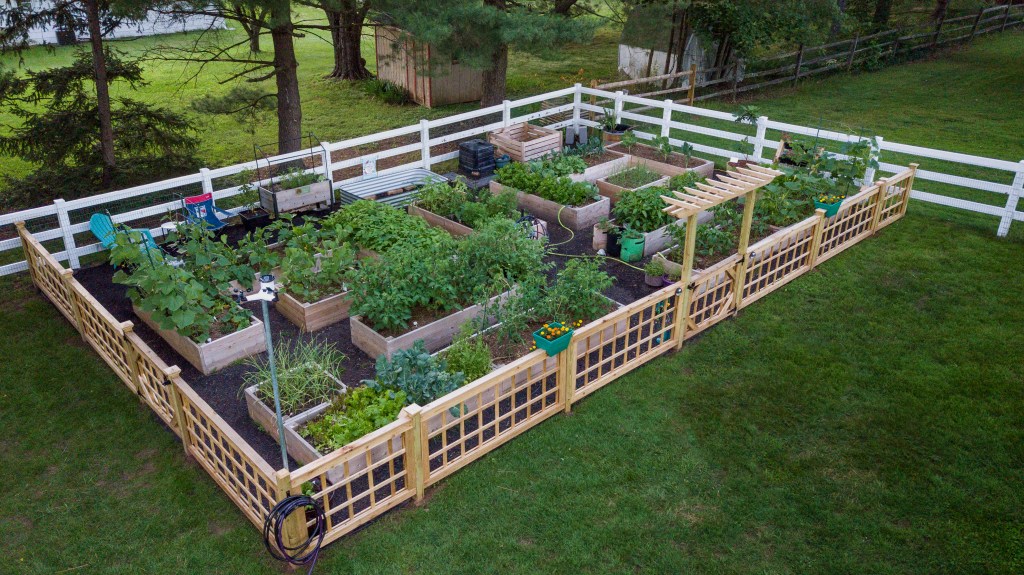
My wife built a garden, she is the gardener in the family. She designed and constructed 17 raised beds herself. I helped prep the area (an old in-ground garden from the previous owner), moved soil and mulch, and shifted beds into place. I thought I was just lending a hand.
What I didn’t realize was that we were building an ecosystem and I would soon become sucked into the world.
That first year, I became completely absorbed by the life that showed up. I started noticing the differences between mason bees, honey bees, and bumble bees. I learned about parasitic wasps, orb weavers, and the quiet utility of creatures most people overlook or avoid. I’ve only seen a few snakes so far, but even that felt like a sign we were doing something right.
We weren’t just growing food. We were creating habitat.
What began as a single garden area has since expanded into seven distinct spaces across our yard, each with its own purpose:
- The Original Garden (30’ x 40’): Home to 16 food beds, a pollinator bed, a metal raised bed, two compost bins, mushroom logs, a wine-barrel pond, and a Chicago Hardy fig tree.
- The Berry Patch: Five blackberry bushes, five blueberry bushes, and roughly 56 strawberry plants.
- The Orchard: Eight fruit trees trained using the Grow a Little Fruit Tree method—still young, but full of promise.
- The Spice Girls: A dedicated space for growing as many of our own culinary spices as possible.
- Fig-A-Row: Five fig trees planted along a less-traveled path where strawberries once lived.
- Field of Dreams: About 420 square feet converted into two test fields, currently planted with heirloom Red Winter Wheat and destined for experiments like Three Sisters planting.
- The Bird Garden: A reclaimed area dedicated to birds and wildlife after the removal of diseased trees.
With every expansion came more life and with it, a resurgence of the curiosity I had as a kid. The kind that makes you stop, observe, photograph, research, and ask better questions about the world right outside your door.
So why start this blog?
Rooted in Nateure is a place to document what I’m learning about gardening, homesteading, wildlife photography, and land stewardship. It’s also where I’ll share insights from working with organizations like Backyard Eats, Arch Wild, Perkiomen Watershed Conservancy, Wissahickon Trails, and other local preserves.
If this space does its job, it will answer questions, spark curiosity, and help others strengthen their relationship with the natural world whether they’re managing acres or a single backyard.
You don’t have to change the world.
But you can change your world.
 Rooted In Nateure
Leave a comment