

I never really thought about where my food came from growing up. I only ever really knew what I wanted. It was a combination of home meals and then as life got busier in my childhood it became “I’m stopping at (insert fast food chain here), what do you want?”. It wasn’t until high school when I nearly hit a weight that I never wanted to hit when I began to begin to pay attention.
Like most people, I looked at caloric intake to start off which helped me lose weight combined with exercise. That all lasted through college and instead of gaining the freshman 15, I lost about 20lbs while gaining muscle all throughout college. My relationship with food remained status quo through out college though, eat meat, veg, and fruits…and enjoy the occasional birthday cake ice cream. It wasn’t until I came home from college and got into CrossFit in 2015 that I really began to take notice what I was eating.
The combination of learning about the Paleo diet, & watching Food, INC opened my awareness. It was at that point that I began searching out grass-fed beef and more organic foods. Over the next 6 or 7 years that’s where I was with food: organic & grass-fed, pasture raised, and all of those buzz words that you are told to look out for. It wasn’t until my honeymoon when I realized that we’ve been doing food all wrong here in the US.
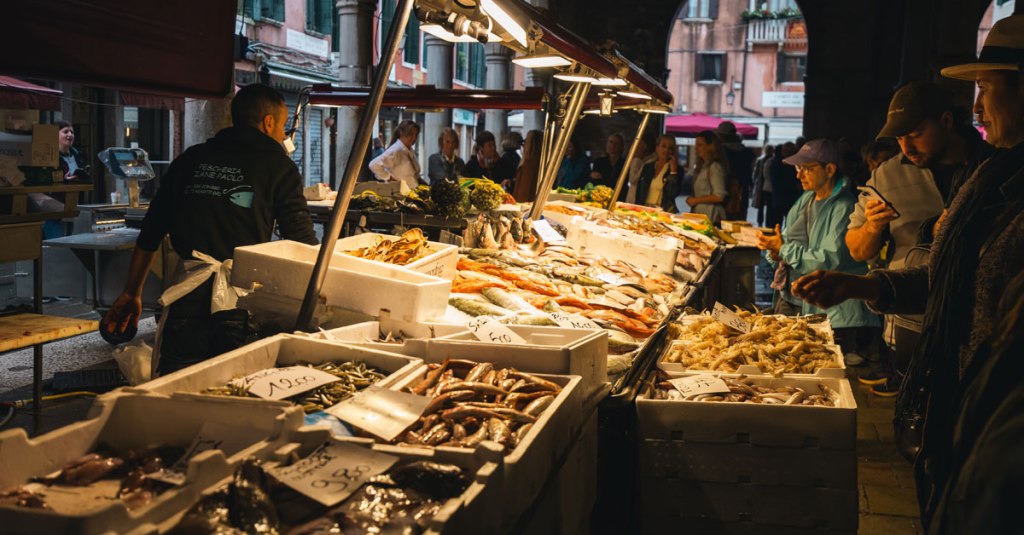
My honeymoon took me to 2 weeks in Italy, trying all sorts of food and taking cooking classes, wine & limoncello tastings, and just enjoying what there was. Things we learned on that trip that were food related were:
- Pistachio pesto is incredible
- Pasta doesn’t need any more than 2 ingredients
- Pizza doesn’t need to be injected with yeast…that’s probably why you feel terrible afterwards.
- You shouldn’t eat the meat while in Venice because it comes from in-land (this is was the most eye opening)
You don’t need to add olive oil to your pasta when making it. Just use Type 00 flour and an egg (1 egg per about 100g of flour). That’s it. Stop it with your nonsense. Keep it simple.
In a quest to learn more about Neapolitan style pizza I learned that because we (as American culture) is more immediate, we add a lot of yeast to dough in order to get it to rise quicker instead of letting the dough ferment naturally over a longer period of time.
Now for the creme de la creme: How far is your food coming from? Italy is known for it’s variety of dishes and styles throughout the entirety of the country. A country that is barely larger than New England & the Mid-Atlantic combined. We were told not to get meat while in Venice because it’s not local! To be fair the seafood was incredible in Venice but we needed a change for a meal and it was the best choice that we could have made. We ventured into a restaurant called Al Timon. We were serve an incredible steak dinner paired with a delicious red wine, followed up with some grappa. The experience was made all the better by having a conversation with the owner, and during it his son came in and they talked as father and son…I can’t imagine that happening in the states. All of this made me think about how far was our food coming from back home.
What does local mean in the US?
“Products that are transported less than 400 miles from their origin or are produced within the same state.” – 2008 Food, Conservation, and Energy Act
400 miles? We were just told that 10 miles was too far.
As avid Farmer’s Market attendee’s we tried to figure out how we can do better. Not only will food taste better because it’ll be fresh and in season but it will also helps support the local economy. Our beef now comes from a farm that’s about 10 miles away, our pork & chicken about 20 miles, eggs from various hyper local farms (until we get chickens), and vegetables & fruits from a variety of truly local farms if not the backyard. Most of our groceries come from within about 50 miles as of now. We have had an incredible opportunity to meet so many farmers and build relationships with them and introduce other people to their products. Seafood & fish is a different story for a different post.
Now this isn’t to say we don’t go to the grocery store. We do. We still grab frozen chicken nuggets, citrus, peanuts…things we can’t grow here or source locally year-round.
The goal was never purity. The goal was awareness.
What Italy showed me wasn’t that Americans eat “bad food.” It’s that we’ve been separated from it, by distance, by speed, by convenience, and by a system that rewards efficiency over stewardship. When food has a face, a farm, and a season attached to it, you treat it differently. You waste less. You cook more simply. You eat more intentionally.
Eating locally isn’t about nostalgia or virtue signaling. It’s about resilience. It’s about supporting people you can shake hands with. It’s about understanding that food is not just fuel, it’s culture, ecology, and community.
We won’t ever do this perfectly. But every mile we shorten between our plate and the source feels like a step in the right direction.
And once you see that, it’s hard to unsee it.
 Rooted In Nateure
Leave a comment